.png)

Layer cages are popular in the global poultry farming industry due to their benefits such as improved sanitation, disease prevention, and increased egg production. They provide a hygienic growing environment, improve ventilation and save space. These cages also help farmers manage their poultry easily, reduce labor costs and increase productivity. Additionally, the cages are equipped with automatic feeding and drinking systems to ensure chick health and safety.
The materials of layer cage
Layer cage material is crucial for poultry farmers as it directly impacts the chicks’ comfort, health, and productivity. Different materials possess unique properties that make them ideal for particular farming practices and environments.
Galvanized steel is a popular choice due to its corrosion resistance, durability, and easy maintenance. It is ideal for wet environments where rust and corrosion are common. However, it may not be suitable for high-temperature regions as it absorbs heat and causes discomfort to the chicks.
PVC-coated wire provides good rust and corrosion resistance and is lightweight and easy to assemble. This makes it ideal for small-scale farming operations. However, it may not be as durable as galvanized steel, limiting its suitability for large commercial farms.
Stainless steel cages are durable and easy to clean, making them suitable for high-temperature environments where rust and corrosion are severe. However, they can be expensive and may not be affordable for small-scale farmers.
In summary, farmers should choose layer cage materials based on their specific needs. Galvanized steel for wet environments, PVC-coated wire for small farms, and stainless steel for hot climates.

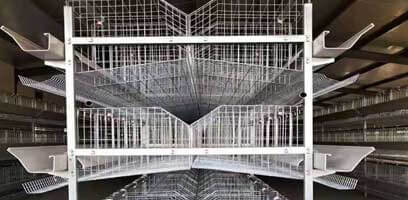
steel cage for layers chickens
Steel cage for layers chickens have become a popular choice among poultry farmers due to their many advantages. Steel cage for layers chickens are designed to provide chickens with a comfortable and safe living environment while increasing their productivity.
One of the main advantages of steel cage for layers chickens is their durability. They are made of galvanized steel to resist corrosion, rust and wear. This makes them ideal for use in wet environments where rust and corrosion can be a major concern.
Steel cage for layers chickens are also easy to clean and maintain. They are easy to sanitize and the smooth surface prevents the growth of bacteria and germs. This improves house hygiene and reduces the possibility of disease and infection.
Another advantage of steel cage for layers chickens is their space-saving design. They are stackable and can be arranged in a way that maximizes the available space. This is especially important on commercial farms that need to house a large number of chickens in a limited space.
Steel cage for layers chickens are also designed to provide a comfortable living environment for chickens. They are equipped with features such as feeders, drinkers and perches where the chickens can eat, drink and rest comfortably. This improves their well-being and productivity.
However, it should be noted that the use of steel cage for layers chickens also has disadvantages. They can trap heat and make living conditions uncomfortable for chickens in hot climates. Additionally, space within the cage may be restricted, affecting the birds’ ability to move and engage in natural behaviors.
To sum up, the steel cage for layers chickens is durable, easy to clean, saves space, and is designed to provide a comfortable living environment for chickens. However, farmers must consider environmental conditions and space constraints when choosing steel cages. They must also ensure that the cages are properly maintained and cleaned to prevent the spread of disease and infection.
galvanized chicken layer cages
Galvanized chicken layer cages are a popular choice among poultry farmers due to their many advantages. Galvanized chicken layer cages are made of galvanized steel, which is a type of steel coated with a layer of zinc, making the cage more durable, corrosion and rust resistant, and easier to maintain.
One of the main advantages of galvanized chicken layer cages is their durability. They can withstand harsh environmental conditions and are resistant to wear. This makes them ideal for use in wet environments where corrosion and rust can be major concerns.
Galvanized chicken layer cages are also easy to clean and maintain. Their smooth surface prevents the build-up of bacteria and germs, making them more hygienic and reducing the risk of disease and infection in the flock. Furthermore, their design allows efficient use of space, which is very important in commercial poultry farms where space is often limited.
Another advantage of Galvanized chicken layer cages is that they provide a comfortable living environment for the chickens. They are designed with features like feeders, drinkers and perches for chickens to eat, drink and rest in comfort. This improves their overall health and productivity.
However, it should be noted that there are some limitations to using galvanized egg cages. They can trap heat and make living conditions uncomfortable for chickens in hot climates. Additionally, space within the cage may be restricted, affecting the birds’ ability to move and engage in natural behaviors.
To sum up, the galvanized chicken layer cages is durable, easy to clean, and provides a comfortable living environment for chickens. They are ideal for use in wet and humid environments and can help improve house hygiene. However, farmers must consider environmental conditions and space constraints before choosing galvanized layer cages. They must also ensure that the cages are properly maintained and cleaned to prevent the spread of disease and infection.
the difference between steel cage for layers chickens and galvanized chicken layer cage
Steel cage for layers chickens and galvanized chicken layer cages are two types of cages commonly used in poultry farming. The main difference between them is the material they are made of.
Steel cage for layers chickens are made of plain steel without any protective coating. While they are more affordable than galvanized cages, they are not as durable and are more prone to rust and corrosion. They are also more difficult to clean and maintain.
On the other hand, galvanized chicken layer cages are made of steel that has been coated with a layer of zinc, making them more resistant to corrosion and rust. They are also easier to clean and maintain than steel cages. Galvanized cages are more durable and can withstand harsh environmental conditions, making them a better choice for humid and wet environments.
Another difference between the two types of cages is their appearance. Galvanized cages have a shiny, silver appearance due to the zinc coating, while steel cages have a duller, matte finish.
Overall, galvanized chicken layer cages are the better choice due to their durability, resistance to rust and corrosion, and ease of maintenance. While they may be more expensive than steel cages, they can save poultry farmers money in the long run by requiring less frequent replacement and maintenance.