.png)

automatic aviary watering system for sale
In order to improve breeding efficiency and management convenience, large-scale aviary breeding systems may adopt automated and intelligent watering systems. These systems can automatically monitor water level and water quality, and automatically add water or clean water sources as needed. In addition, some advanced systems can also optimize drinking water management through data analysis to ensure that chickens get sufficient and clean drinking water.
Advanced automatic aviary watering system can grasp the operating status, water level and water quality of the aviary watering system in real time through intelligent monitoring technology.
The automatic aviary watering system is equipped with precise metering devices. According to the drinking water needs under different growth stages and climatic conditions, the water supply plan is reasonably set to achieve accurate allocation of water resources and reduce unnecessary waste.
The automatic aviary watering system can adopt water-saving design, such as drip irrigation, infiltration irrigation and other water-saving irrigation methods to reduce water consumption.
According to the drinking habits and work and rest time of the chickens, the automatic aviary watering system arranges the water supply time reasonably to avoid excessive water supply during the rest time or low water demand period of the chickens.
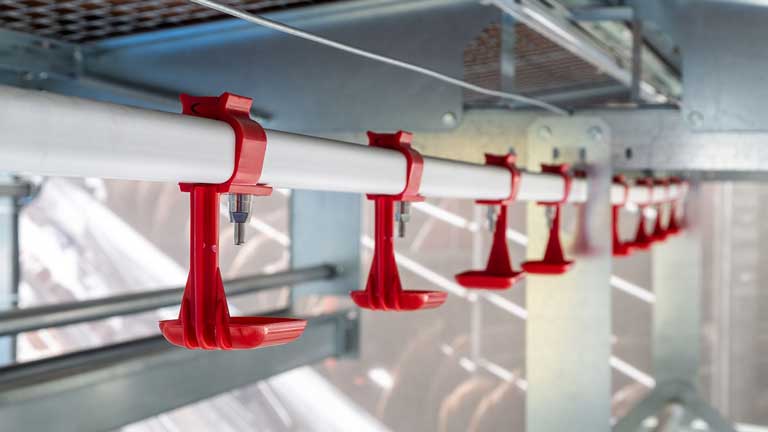
nipple waterer for bird aviary watering system
For most aviary farms, the nipple waterer with a trigger device is undoubtedly a good choice. The nipple waterer provides a more natural and convenient way for chickens to drink water. They can drink water as easily as pecking, reducing the pressure caused by drinking water difficulties. At the same time, the unique design of the nipple waterer for bird aviary watering system can reduce water pollution, thereby reducing the risk of disease transmission.
In the aviary breeding system, the installation density and height setting of the nipple waterer are crucial to ensure the drinking water needs of the chickens and reduce the waste of water resources.
Installation density
Installation ratio: According to the behavioral habits and body structure of flat chickens, as well as the drinking water needs of each chicken, it is generally recommended to install one nipple waterer for every 8 to 10 hens. This ensures that the chickens can fully meet their drinking water needs while avoiding waste caused by too many drinkers.
Nipple spacing: In the chicken house, the spacing of the nipple waterer outlets also needs attention. For a 12-14m (39-46ft) wide chicken house, if only 2 water lines are used, the outlet spacing should be set to 20cm (7/8 inches) to ensure that the chickens can easily access and use the drinker.
Installation height
Initial height: When drinking for the first time, the nipple waterer outlet should be level with the chicken’s eye so that the chicken can easily find and start using the drinker.
Adjusting height: As the chicken grows, the height of the drinker also needs to be gradually adjusted. On the second day and thereafter, the height should be gradually adjusted so that the chicken’s head is at a 45° angle to the outlet. This setting ensures that the chicken only needs to stretch its neck slightly to drink water, and its normal drinking will not be affected by the waterer being installed too high or too low.
Summary
In the aviary breeding system, the installation density and height setting of the nipple waterer need to take into account the chicken’s drinking needs, the size and layout of the chicken house, and the growth stage of the chicken. Reasonable installation density can ensure that the chickens can fully meet their drinking water needs, while appropriate installation height can reduce the difficulty of drinking water for chickens and the waste of water resources. Therefore, in actual operation, it is recommended to make flexible adjustments according to specific circumstances to achieve the best effect.
bird watering system for cage system, floor system and aviary system
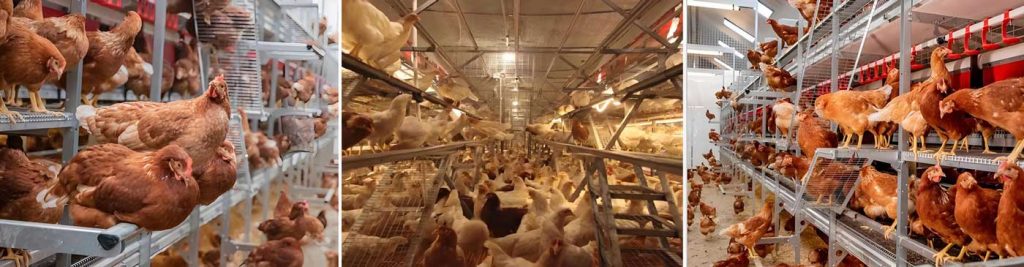
The cage system, floor system, and aviary system are common methods in modern poultry farming, each with specific similarities and significant differences in their watering systems.
Similarities:
Water Source and Quality Management: All systems require providing clean and adequate water, ensuring the water quality meets drinking standards to prevent diseases and health issues.
Automation Level: Modern cage, floor, and aviary systems are typically equipped with automated watering devices, reducing labor and increasing management efficiency.
Water Pipe Layout: In all systems, the water pipe layout needs to be designed rationally to ensure all birds have easy access to water.
Maintenance and Cleaning: The watering equipment in all systems requires regular maintenance and cleaning to prevent clogging and bacterial growth.
Differences:
Watering Method: Typically uses nipple drinkers or trough drinkers installed at the top or sides of the cage, allowing birds to drink water from within the cage.
Water Distribution: The water source is relatively fixed, installed in specific positions within the cage, so birds only need to stretch their necks to drink.
Watering Method: Uses nipple drinkers, but hanging or floor-standing drinkers, such as bell drinkers or cup drinkers, are more common.
Water Distribution: Drinkers can be moved and are distributed at various locations within the poultry house to ensure the flock can easily drink water throughout the activity area.
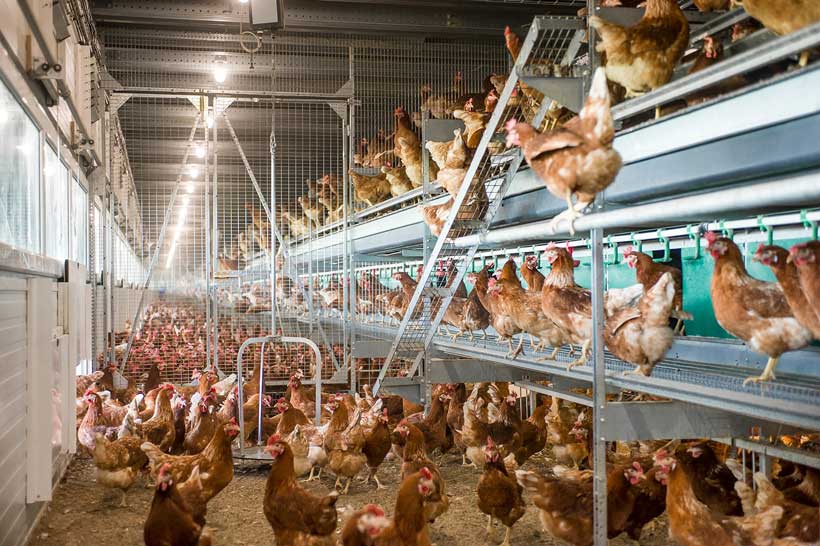
Watering Method: Commonly uses nipple drinkers and cup drinkers distributed at different heights and locations to suit the birds’ activity habits within the multi-tier structure.
Water Distribution: Watering equipment is distributed across multiple levels, including ground and elevated areas, allowing birds to drink at different heights, matching their vertical activity.
Widespread Use of Nipple Drinkers: Nipple drinkers are widely used in all three systems due to their hygiene and convenience.
Diversity in Drinker Types and Locations: In the floor and aviary systems, drinker types and installation locations are more varied to meet the birds’ activity needs in different environments.
Structural Layout Differences: Watering equipment in the cage system is fixed, whereas, in the floor and aviary systems, the layout is more flexible to accommodate different rearing spaces and bird activity ranges.
Understanding these similarities and differences helps us better grasp the design principles and usage characteristics of watering systems in different farming systems.