.png)
In today’s society, environmental protection has become an issue that everyone cares about. Whether in daily life or in production activities in all walks of life, we are striving to achieve sustainable chicken farming. For the breeding industry, the relationship between chicken cage design and sustainable chicken farming is increasingly close. How to achieve green and efficient breeding through the design of chicken cages is a challenge faced by farmers and designers alike.
Energy-saving design of chicken cages
Traditional chicken cage design often only considers the raising and management of chickens, but ignores energy consumption. In fact, the energy consumption of chicken cages mainly comes from heating, ventilation and lighting. In order to achieve energy saving, we can optimize from the following aspects.

Selection of insulation materials
The use of new insulation materials, such as nano-ceramic fibers, can effectively maintain the temperature in the chicken cage and reduce the running time of the heating equipment. This not only helps save energy, but also provides a more comfortable living environment and promotes healthier growth and reproduction of chickens.
Design of natural ventilation
Through reasonable layout and design, chicken cages can make full use of natural wind for ventilation in summer, reducing energy consumption of air conditioning or ventilation equipment. This design can not only reduce the energy burden, but also help maintain fresh air in the chicken house and improve the efficiency of sustainable chicken farming.
LED lighting
LED lighting not only has high brightness and low heat generation, but also has a long life and consumes less energy. The use of LED lighting can greatly reduce lighting energy consumption in chicken cages. This has significant positive significance for realizing sustainable chicken farming and reducing electricity consumption.
Use of recyclable materials
As people’s awareness of environmental protection increases, more and more farmers are beginning to pay attention to the environmental impact of chicken cage manufacturing materials. Using recyclable or degradable materials is an effective way to achieve this goal.
Bamboo chicken cage
As a fast-growing, renewable plant, using bamboo to make chicken cages not only reduces reliance on limited wood, but is also harmless to the environment after degradation. The use of this material is in line with the concept of sustainable development and helps reduce pressure on natural resources.
Straw composite materials
Using crop straw to make new composite materials not only saves wood resources, but also solves the problem of straw waste. At the same time, this material is easily degraded after being discarded and has less impact on the environment. This recycling design idea is one of the innovations to realize the greening of the breeding industry.
Spatial efficiency and land use

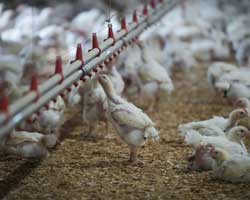
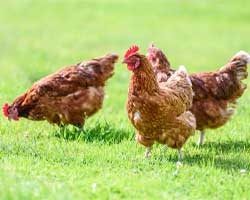
The limited land resources force us to think about how to use space more effectively. The design of the chicken cage also needs to be optimized in terms of space efficiency.
Multi-layer chicken cage design
By designing multi-layer chicken cages, more chickens can be raised per unit area, thereby improving land and space utilization. This three-dimensional design not only improves efficiency of sustainable poultry farming, but also minimizes the floor space, which plays a positive role in alleviating the pressure on land resources.
Modular layout
Each chicken cage can be assembled and disassembled as an independent unit, so that the layout of the chicken cage can be flexibly adjusted according to breeding needs and improve the efficiency of space use. This modular design not only facilitates breeding management, but also provides greater flexibility for future expansion or renovation.
Waste treatment and resource utilization
If the waste generated during the breeding process is not handled properly, it will cause a great burden on the environment. Through the design of chicken cages, we can more conveniently carry out waste treatment and resource utilization.
Automatic cleaning system
Reasonable design of slope and manure leakage board allows chicken manure to automatically slide down and be collected centrally, reducing the frequency of manual cleaning. This automatic cleaning system not only improves work efficiency, but also reduces environmental pollution and enables orderly processing of waste resources.
Production of organic fertilizer
The collected chicken manure is fermented and made into organic fertilizer, which is used for fertilizing farmland, forming a virtuous ecological cycle. This resource utilization approach not only solves the problem of waste disposal, but also provides a sustainable source of organic fertilizer for agricultural production.
Water source management
A properly designed drinking water system ensures clean water and reduces waste. At the same time, discharge standards must be met for sewage treatment. Reasonable water source management not only ensures the survival needs of chickens, but also reduces the waste of water resources, which is in line with the principles of sustainable poultry farming.
In short, from the perspective of sustainable poultry farming, the design of chicken cages is not only to meet the needs of sustainable poultry farming, but also to consider how to coexist harmoniously with the environment and how to conduct breeding activities more greenly. As farmers and designers, we should all pay attention to this issue and work together to build a green breeding environment. Through energy-saving design, the use of recyclable materials, optimization of space efficiency and land use, and strategies for waste treatment and resource utilization, we can achieve sustainable poultry farming in the design of chicken cages and lay a solid foundation for future agricultural development. This green breeding concept is not only widely used in sustainable poultry farming, but can also provide feasible reference and reference for other livestock and poultry breeding industries, promoting the entire breeding industry to develop in a more environmentally friendly and sustainable direction.